Friday, 18 January 2013

Camera work, editing and technology

In our opening 'The Last Chapter' we used a range of different camera shot, angles and movement such as; mid shot, close up, long shot, extreme close up, over the shoulder shot and high and low angle shots, match on action, zoom and panning. We used a variety of shots, angles and movement to create tension to the audience and to keep them engaged. We did not use many hand held shots apart from the credits as hand held shots create confusion and a distort effect which we did not want to create as it did not link to our narrative. However, we did use one when the 5th victim is walking and the serial killer is stalking her, this is to get her point of view and so the audience can see what she can see.

To create our opening we had to use the software 'imovie'. This was new to both of us this year as in year 11 we used a different software. Due to it being new to us we had to learn how to use it and we did this by doing a preliminary task which helped us how to add crop, cut and add effects if needed. We both felt that 'imovie' was a good editing system as it was a lot faster than last year, and had more features and effects. In our opening we used 'ken burns' on the serial killer when he is in the garage, this helped us by not getting in some of the unwanted settings and props. We also used the effect 'vignetta' which gave it a gritty look which added to the atmosphere. We also used the 'mute' button as there was some background sound which was not needed, so we muted it so we did not have to re-film.


We decided to get a picture of 'iMovie' so we could annotate it and to show some of the features which we used in order to create out thriller opening 'The Last Chapter'.

We also had to use a new software called 'Garage Band' which was a software where we could make our own music for our opening of our thriller. It let us use a range of different instruments such as piano, drums, base and guitar. Each instrument had a different sound and effect and we were able to choose from a wide variety of different types. For example, we choose...... as we felt like it created tension and a mysterious atmosphere. We were also able to choose how loud or quiet we wanted the music. We mixed it up and used a range of quite and loud music as it created even more tension. For example when the matches were lit we made the music slowly go out so the audience could hear the lighting of the match diegetic sound. It took us both a while to get used to the software as it was new to both of us, and in GCSE we did not have to creat our own music we could use already made music which made it a lot simpler. However, we both enjoyed using this new technology as it made us be independent by having to create it ourselves and we could rely on anyone else to do it for us. We wanted to increase and decrease tension and by creating it ourselves we had control over it. 


Lastly, due to us doing A-level media, we had to change our camera to an SD camera. By changing to an SD camera it meant that we could import our footage ourselves, straight onto our apple mac computer. We did this by taking out the SD card and placing it into the side of the computer, where it came up with our footage and we just had to click on the clips which we wanted and it would import straight to our 'iMovie' where we could start editing. We felt like it was very easy and simple to upload the footage ourselves, and we did not have any problems doing it.  

Our progression from GCSE and the Preliminary task

Overall, we both felt like we successfully used the technology which we were given to the best of our abilities. Before we did any editing or filming we doubled checked we knew how to use the camera, and the editing software's by doing a preliminary task. We felt like this did help us get used to the technology as we hadn't used it for quite a while and we were given new software's to use. By doing the preliminary task which was the continuity editing task, we were able to try out the 180 degree rule, match on action and shot reverse shot. Due to us using them in this task and us thinking they looked effective we wanted to use it in our opening thriller. However, we only used the match on action shot in our opening when the killer was walking through the gate. It showed him walking up to the gate, then it continuing on the other side showing him through the gate. We felt like we achieved this successfully by our editing skills and made it look realistic. We used the 180 degree rule on the pool scene so it didn't look unrealistic, however we didn't use it again as it was not needed due to us not having a conversation between two people. We also didn't use the shot reverse shot due to us not having a conversation within our opening. However, if we filmed more than two minutes of our opening we would have used it as we knew how to use it effectively.
When comparing our A-level work to our GCSE work, we both felt like we made a lot of progression as our camera work was a lot steadier, we used a variety of different shots and angles and due to the new software which we were given, and we felt that we could explore and use the best features for our thriller which will make it most effective. 

Saturday, 5 January 2013

Mise-en-scene


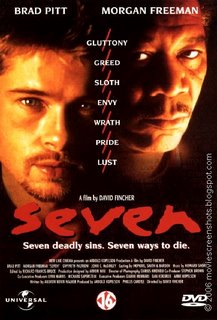
For our thriller opening 'The Last Chapter', we thought very carefully what props we were going to use. One of our props were the stack of books which we used for when the villain is planning to kill the 5th victim, which is his last victim. We have took a couple of photos of the books. We decided to use these books as they were quite thick, and looked quite old by the dark covers which were ripped. In our opening we used a variety of different shots of the books which we're on the wooden tables, which include: extreme close up shots, close up shots, high angle shot and a mid shot. We felt like these were good props and camera angles to use within our opening as they helped us fulfill the thriller genre. We also used a notepad with pens and highlights scatted around the table as it ties in with the scene, and shows that the villain has been scribbling and jotting down notes which are important to him, which will help kill the 5th victim. We got the this idea from the film 'SE7EN' as we were extremely influenced by this thriller film. In the opening of this film their main prop is the book and everything else revolves around it, as this shows the crimes which he has done to each of the victims. 

In our thriller we didn't need many costumes. For the 5th victim we chose her to wear her casual clothes as she is getting stalked by the serial killer. By having the 5th victim in casual clothing it shows realism as it is what she would wear in her every day life. 

For the serial killer, we thought carefully about this as we felt his costume was very important. After watching the film 'SE7EN' which influenced us, we noticed that the serial killer in the opening never revealed his identity, which made us want to follow this method aswell. We decided to make the killer wear all black as black connotes darkness and evil. He wears a black coat with the hood up at all times. We thought this would be a good idea as it hides his face and makes the audience not be able to see his identity which we wanted to do. By having this as the villains costume it helps us accomplish the thriller genre.

We have also used 5 Polaroid pictures as props, and each one of the pictures is a picture of each of the five victims. We decided to use a picture of each of the victims as the serial killer kills each one of them at a time and then burns the photo of them afterwards. By burning the photo after he has killed the 4th victim for example, it shows the end of her life as the photo turns to ashes. We felt like this would link to the thriller genre.


For our thriller, we also used photographs of the 5th victim. We did this as our film is called 'The last chapter' and it is all based around the 5th victim, as all of the other victims have already been killed. These pictures symbolises that the 5th victim has got stalked by the serial killer, and the killer is planning on how to kill her by knowing her daily roots.


Thursday, 3 January 2013

BBFC: British Board of Film Classification

The BBFC which is the 'British Board of Film Classification' is a non- governmental organisation in the film industry. It classify's videos, DVD's and some video games which are under the 'Video Recordings Act 2010'. The BBFC first started in 1912, and began operating on 1st January 1913, which let cinemas have licenses. It was brought in for safety reasons.


Films which are going to be released in the cinema are age rated by a couple of the BBFC's examiners by using the guidelines which they have. They do this because it is the best way to make sure the age rating is the suitable age rating for the film. If an examiner is unsure about what age rating it is, for example a thriller such as 'SE7EN' being an 15 or 18, they would have to asked other members within the BBFC such as the director and presidential team, to be certain.


Universal- Suitable for all- ‘U’ film is normally suitable for anyone aged four years and over. These films should not have any scenes of violece, threat or horror in which could upset the younger audience.


PG- Parental Guidance-  A 'PG' film is for most people, but some scenes may be unsuitable for young children. However, if children are watching a PG film they should be supervised by a parent or adult. These film should not frighten a young child around the age of eight. 

Suitable for 12 years and over- The ‘12A’ group only exists for films which are shown in the cinema. This means that anyone younger than the age of 12 cannot see a '12A' film in the cinema, unless they have parental guidance.  

Suitable only for 15 years and over- '15' rated films mean that anyone younger than 15 cannot see a ‘15’ film in a cinema. It also means that anyone younger than 15 cannot rent or buy a ‘15’ rated video work. 

Suitable only for adults- A '18' film is only suitable for adults, which means anyone younger than the age of 18 may not see the film in cinema. It also means that that anyone younger than 18 cannot buy or rent an 18 film. This is due to the inappropriate scenes or strong language and violence within a film.  

To be shown only in specially licensed cinemas, or supplied only in licensed sex shops, and to adults of not less than 18 years- The ‘R18’ group is a special and legally controlled classification mainly for explicit works of consenting sex or strong fetish material involving adults. These films can only be shown to adults in specially licensed cinemas, and video works may be sold to adults only in licensed sex shops. These films cannot be sent in the post as it might nor go to the right place. The following bullet-points are not acceptable: 

  • any material which is in breach of the criminal law. 
  • material including paedophilia, incest or rape which may include adults role-playing as non-adults
  • the portrayal of any sexual activity which involves lack of consent 
  • the infliction of pain or acts which may cause lasting physical harm
  • penetration by any object associated with violence or likely to cause physical harm
  • any sexual threats, humiliation or abuse which does not form part of a clearly consenting role-playing game. Strong physical or verbal abuse, even if consensual, is unlikely to be acceptable.

Monday, 31 December 2012

Thriller Genre

The thriller genre can overlap with the horror genre as they are quite similar to each other. The horror genre has more blood and gore in it, where as the thriller genre is more about getting the audience involved and trying to figure out things in the narrative. A few examples of thriller films would be: 'Seven', 'Memento', and 'Saw', as all three of these films get you thinking and trying to solve the clues as the narrative goes on. The thriller genre like to gradually build tension and keep suspense  They also leave the audience in uncertainty, with them on the edge of their seats wanting to know what is going to happen next.

Due to the thriller genre being very large, it has let the genre open up into sub genres such as:

  • Crime thrillers
  • Psychology thrillers
  • Mystery thrillers
  • Spy thrillers
  • Conspiracy thrillers
  • Relationship thrillers
Crime thrillers normally focus on the criminal and then the detectives and police trying to figure out who has committed the crime. The crimes which have been committed are usually or armed robber, murder, money, or having a hidden identity. An example of a crime thriller is 'Witness', 'Silence of the Lambs' and 'Untraceable'. 

Psychological thrillers are usually about the protagonist and what they are going through. In these thrillers it can involve a lot of drama and mystery, and you are always thinking about what is happening as they focus mainly on the mind of the characters. Psychological thrillers usually draws in the audience and has a hold over them, as they normally have a personal feel due to the first person narrative. An example of a psychological thriller is 'Se7en' which we were extremely influenced by and also 'Psycho'.

Mystery thrillers are one of the most popular types of thrillers as they are well known. These types of thrillers normally have someones identity revealed or a crime getting solved. They normally include police officers and detectives who try to solve the mystery. Mystery thrillers sometimes make the audience feel like an omniscient viewer as they might find out information before the protagonist, which can build tension.

Spy Thrillers are normally where the protagonist is an agent within the government. They usually include a lot of action scenes, shoot outs and car chases due to all of the chase scenes. They also have an aspect of science fiction due to the gadgets which gets used.


Saturday, 29 December 2012

Codes and Conventions


Every genre has codes and conventions in order to represent the mood which they want to portray. The thriller codes and conventions are quite similar to the horror codes and conventions as the two genres can link over to each other. The thriller codes and conventions are represented through camera angles, sound, mise-en-scene and editing. 

In order to create a feature film, mise en scene of the film making trade, such as music, script, costumes, camera angles and framing, are used. These are only a few examples of film codes. It is the way they are used that helps us understand which characters are playing each role in the story. The directors use the mise en scene so they can encourage us to like or dislike a character and also help us to understand how important each character is in the story.

Mise en scene is very important in a film as the little details such as lighting, camera angles, props and music set the mood which they want to convey.


In a thriller the lighting is usually dark and has low lighting, as this connotes a creepy and mysterious atmosphere. An example of a film which does this is 'SE7EN' in the opening, when a lot of close up shots of the villain planning his victims death. Also throughout the film low lighting is used for effect such as when one of the detectives are in the library trying to find research.


A lot of different camera angles get taken when doing a film. They often switch between different shots in a thriller to make the viewer seem uncertain about what is going on. Low angle shots can be used for villains for example to show them as powerful and dominate, whereas the high angle shots can be used for a victim to show innocence and vulnerability. Another convention is extreme close ups on important object, props or face expressions within a movie. This helps the audience to focus on a certain thing which connotes that it is an important moment in the film. the film 'SE7EN' uses alot of extreme close up, close up, and mid shots in the opening of the film. This is because it is showing the important props within the movie, and this gives you an inside of the film.


The third code and convention is the editing. It gets edited so there is fast and slow paced editing, this makes the movie more exciting, and can cause a disorientated effect. When editing you can also use flashbacks, these are used quite a lot in thriller movies. An example of a movie which does this is 'Menento'. They use flashbacks to show important parts of the movie, which makes the film make sense later on.


The final code and convention is the music which gets used. It can either be slow or fast paced. It normally is quite and slowly gets built up to create tension and suspense. In a lot of movies they use instruments such as pianos and strings which creates a tense atmosphere. In the opening of the film 'SE7EN' they start off by having slow paced music which eventually gets built up to create tension.


The codes and conventions in every thriller film are important as they help set the scene and atmosphere, and they also help establish to thriller genre through camera shots, editing, lighting and props. 


Wednesday, 26 December 2012

Theory's


·         Todorovs Theory

     Todorov’s theory is that every film follows the same structure and that there are different parts to every film, which are: 

  •          equilibrium (harmony)
  •          disruption
  •          recognition
  •          repair
  •          new equilibrium

·         Propps Theory

    Propp’s theory is that there are five main characters in every film which are:

  •       hero
  •       villain
  •       mentor
  •       helper 
  •       princess
      For our thriller we can apply Propps Theory to our narrative. If we were to shoot the whole film, this is how it would go:
     
  •       Hero- Detectives
  •       Villain- Serial killer
  •       Mentor- Serial killers brain/mind 
  •       Helper-Forensic scientists 
  •       Princess- Victim


Sunday, 16 December 2012

Moodboard


This is a mood board showing a variety of pictures that all connote the thriller genre.
  • Detective
  • Guns
  • Knifes
  • Hand cuffs
  • Villans
  • Police badges
  • Magnifying glass
  • Age rating 15 and 18
  • Forensic scientists
  • History books
  • Blue prits
  • Fingerprints
  • Cameras
  • Blood
  • Duck tape
  • Rope
  • Scenes from thrillers
  • Outline of body's


This is a mood board of all of the things which connote to our opening of our thriller 'The Last Chapter'.